If you operate a fleet of buses, trucks, or commercial vehicles in India, you’ve likely heard of AIS 140. But what exactly does it require, who does it apply to, and what happens if your vehicles aren’t compliant?
This guide breaks it down clearly — no jargon, no legal complexity.
What Is AIS 140?
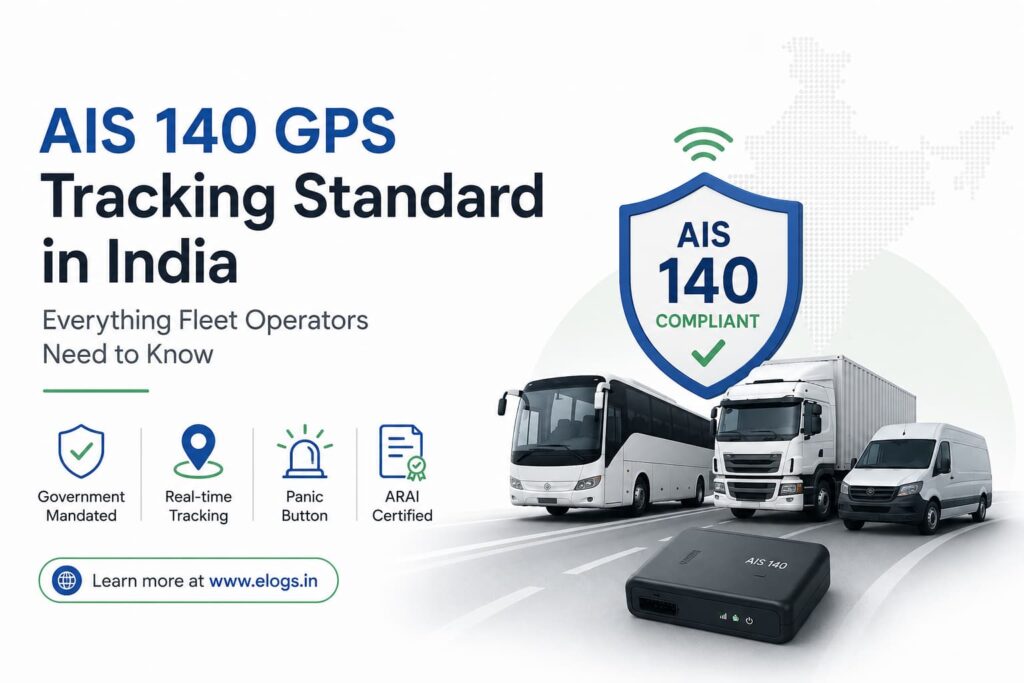
AIS 140 stands for Automotive Industry Standard 140. It is a technical specification issued by the Ministry of Road Transport and Highways (MoRTH) that defines the minimum requirements for Vehicle Location Tracking (VLT) devices fitted to public transport and commercial vehicles in India.
In simple terms: AIS 140 sets the standard for what a GPS tracking device must be able to do before it can be legally installed on a regulated vehicle in India.
The standard was developed in coordination with the Automotive Research Association of India (ARAI) and draws on India’s own satellite navigation system — NavIC (Navigation with Indian Constellation) — alongside the global GPS network. Devices must support both to be AIS 140 certified.
Who Does AIS 140 Apply To?
AIS 140 compliance is mandatory for the following categories of vehicles:
Public transport buses — state transport undertakings, city buses, intercity and interstate buses operating on permit.
School buses — all school transport vehicles are required to carry AIS 140 certified GPS devices, along with a panic button. This is reinforced by CMVR Rule 125I, which we covered in detail in our school bus GPS tracking guide.
Commercial vehicles — trucks, tankers, and heavy goods vehicles operating on national highways and interstate routes.
Contract carriages — taxis and app-based cab aggregators operating in regulated zones.
State transport authorities have the power to extend compliance requirements to additional vehicle categories within their jurisdiction, so fleet operators in states like Karnataka, Maharashtra, Tamil Nadu, and Delhi should check state-specific circulars in addition to the central mandate.
What Does AIS 140 Require?
An AIS 140 certified device must meet the following technical requirements:
1. Dual satellite support — the device must receive signals from both NavIC (India’s regional satellite system) and GPS. This ensures reliable positioning even in areas with limited GPS coverage.
2. Real-time location transmission — position data must be transmitted to the state’s command and control centre at defined intervals. The vehicle’s location must be accessible to the transport authority at all times.
3. Emergency panic button — a physical panic button must be installed in the vehicle, accessible to the driver and passengers. When pressed, it sends an immediate distress alert to the control centre and, in school buses, notifies parents and school administrators.
4. Two-way communication — the device must support communication between the vehicle and the control centre, enabling authorities to send alerts or instructions to drivers.
5. ARAI certification — the device must be certified by the Automotive Research Association of India before it can be legally sold or installed in India. Only ARAI-certified devices satisfy the AIS 140 mandate.
6. Data logging — the device must store location data locally when network connectivity is unavailable, and sync it once the connection is restored. This ensures no gaps in the tracking record.
Benefits Beyond Compliance
For fleet operators, AIS 140 compliance isn’t just about avoiding penalties — it delivers operational value.
Improved driver accountability. Real-time tracking and data logging give fleet managers visibility into route adherence, stoppage times, and driving behaviour. Speeding, unauthorised detours, and excessive idling are all measurable and addressable.
Lower insurance premiums. Many insurers in India offer reduced premiums for fleets with certified GPS tracking. The documented data trail also strengthens insurance claims in the event of accidents or theft.
Reduced fuel costs. Route optimisation and idle time monitoring enabled by AIS 140 devices typically reduce fleet fuel consumption by 10–20%, depending on fleet size and usage patterns.
Passenger safety. The mandatory panic button provides passengers — particularly students and women — with an immediate means of raising an emergency alert, making public transport meaningfully safer.
Which States Are Actively Enforcing AIS 140?
AIS 140 is a central government mandate under MoRTH, meaning it applies to all states and union territories across India — not just select regions. However, enforcement intensity varies by state. The following states have been among the most active in implementing and enforcing compliance:
Delhi — one of the earliest adopters, with the Delhi Transport Corporation mandating AIS 140 devices across its fleet. RTOs in Delhi conduct regular inspections and have authority to impound non-compliant vehicles.
Maharashtra — the Maharashtra State Road Transport Corporation (MSRTC) has rolled out AIS 140 across its bus fleet. Mumbai’s app-based cab operators are also subject to compliance checks.
Karnataka — the Karnataka State Road Transport Corporation (KSRTC) has integrated AIS 140 tracking across routes. Bengaluru’s school bus operators have faced increased RTO scrutiny following state transport circulars.
Tamil Nadu — the State Express Transport Corporation (SETC) and private bus operators on permit routes are required to comply. Tamil Nadu has also been proactive in mandating panic buttons for women’s safety on public transport.
Uttar Pradesh — with one of the largest commercial vehicle populations in India, UP has ramped up AIS 140 enforcement on national highway freight operators and inter-district buses.
Rajasthan — the Rajasthan State Road Transport Corporation has implemented AIS 140 and the state has been active in checking compliance for tourist and contract carriage vehicles.
For fleet operators in any other state, the mandate still applies — the central rule does not require a separate state notification to be enforceable. Check with your Regional Transport Office for the latest local enforcement guidelines.
What Happens If You Don’t Comply?
Non-compliant vehicles are subject to permit cancellations and fines during inspections by Regional Transport Offices (RTOs). In states with active enforcement, vehicles operating without AIS 140 certified devices can be taken off the road immediately.
Beyond penalties, untracked vehicles carry significantly higher liability in the event of accidents, route deviations, or safety incidents — especially for school transport operators. Not sure what’s legal when it comes to GPS tracking? Read our complete guide to GPS tracking laws in India.”
How to Choose an AIS 140 Certified Device
Not all GPS devices sold in India are AIS 140 certified. When evaluating options, confirm:
- The device carries ARAI certification — ask for the certificate number
- It supports NavIC + GPS dual tracking
- It includes a panic button as standard hardware
- The vendor provides data transmission to state servers as part of their service
- The vendor has experience with state-specific compliance requirements in your operating region
At Elogs, we work with AIS 140 certified hardware partners and help fleet operators across India achieve full compliance — from device selection to state server integration.
Talk to the Elogs team about AIS 140 compliance →
Frequently Asked Questions
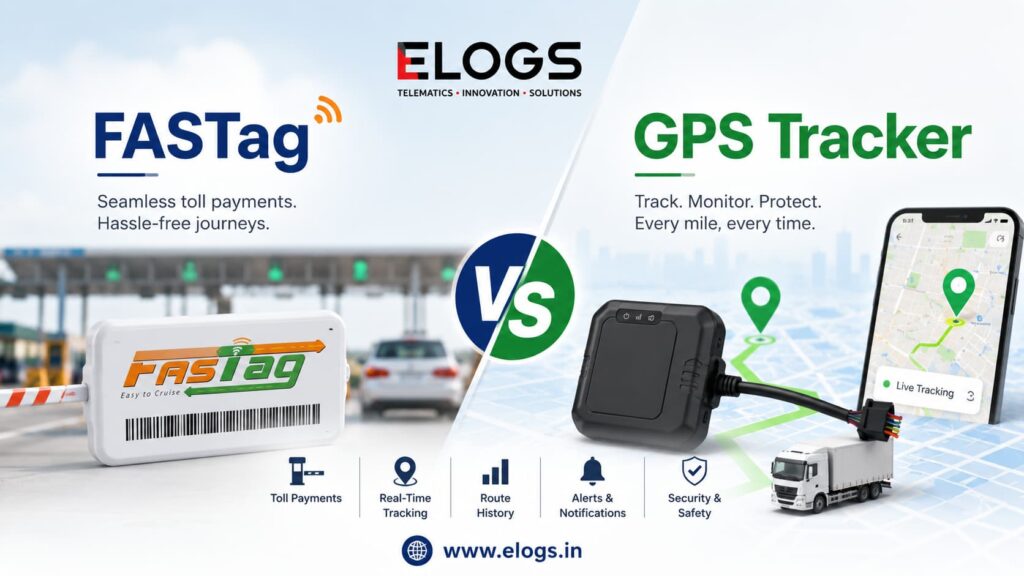
What is the difference between AIS 140 and a regular GPS tracker? A regular GPS tracker simply records and transmits location data. An AIS 140 certified device must additionally support NavIC, include a panic button, transmit data to government control centres, and carry ARAI certification. Non-certified devices do not satisfy the legal mandate.
Is AIS 140 mandatory for private vehicles? No. AIS 140 currently applies to public service vehicles, commercial vehicles on permit, and school buses. Private cars are not required to comply.
How do I know if a GPS device is AIS 140 certified? Ask your vendor for the ARAI certification number. You can also verify certification status through the ARAI website or the MoRTH vehicle tracking portal.
Can I install an AIS 140 device myself? Installation must be carried out by an authorised service provider. Self-installation is not accepted for compliance purposes.
Does AIS 140 apply to electric commercial vehicles? Yes. AIS 140 applies to all regulated vehicle categories regardless of fuel type, including electric buses and electric commercial vehicles.
—————————————————————————————————————————————
Published by the Elogs Team | elogs.in